The Brief

Migration

In their 2020 brief, the International Society of Typographic Designers asked practitioners to to design a typographic work celebrating the theme of ‘migration’ in any abstracted meaning of the word. I chose to focus on the migration of thinking in the mathematical community from the usage of the term "proof" to "formal proof" in order to account for the introduction of computers.

Communication Goals

The content included in these books can be summed up into 6 main points, each of which is drawn from the 6 sections of “The New Formal Proof:”


Sources & Research

Synthesizing & Strategy

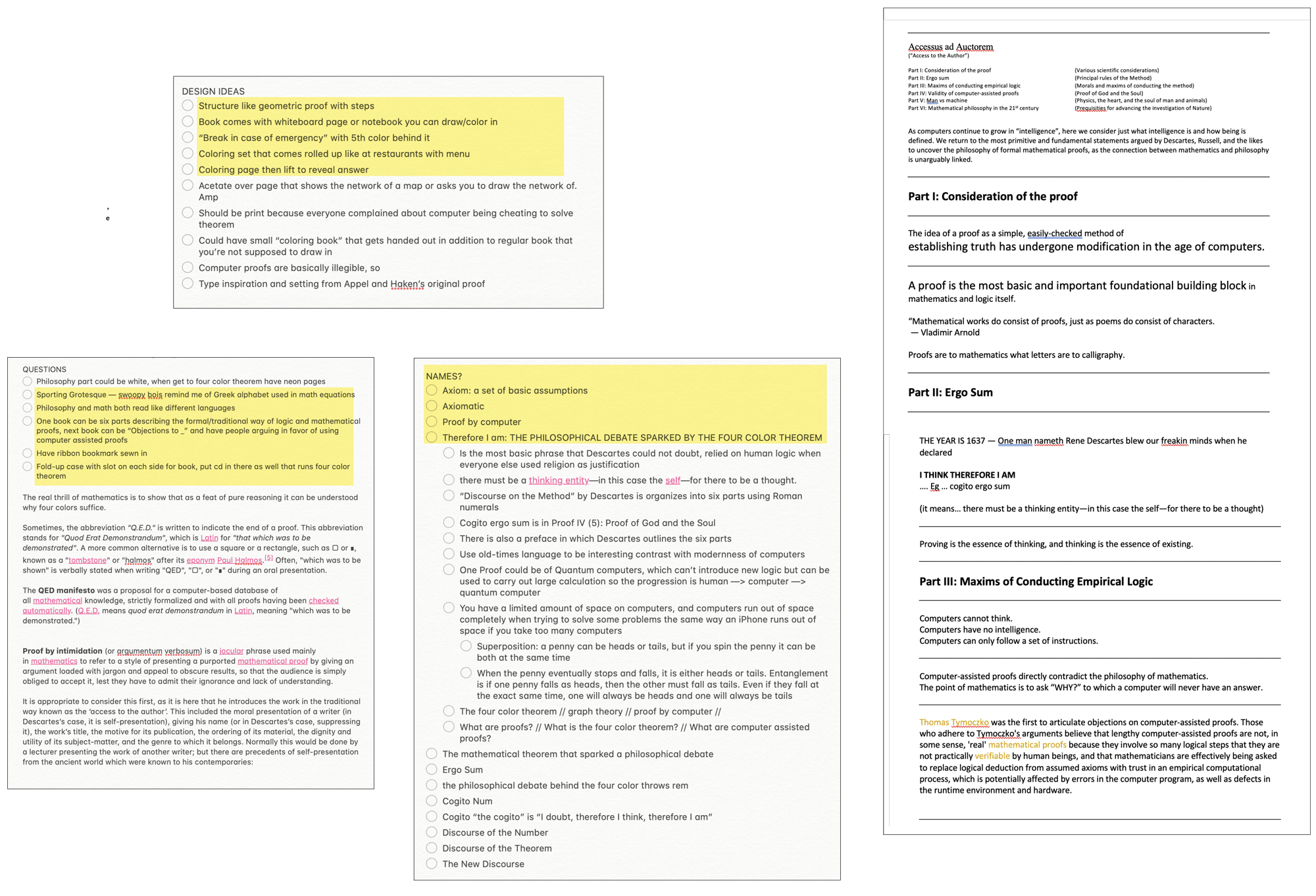
After reading through source material and pulling out pieces I could use, I started to collage all of my thoughts together and brainstorm some different approaches and solutions.

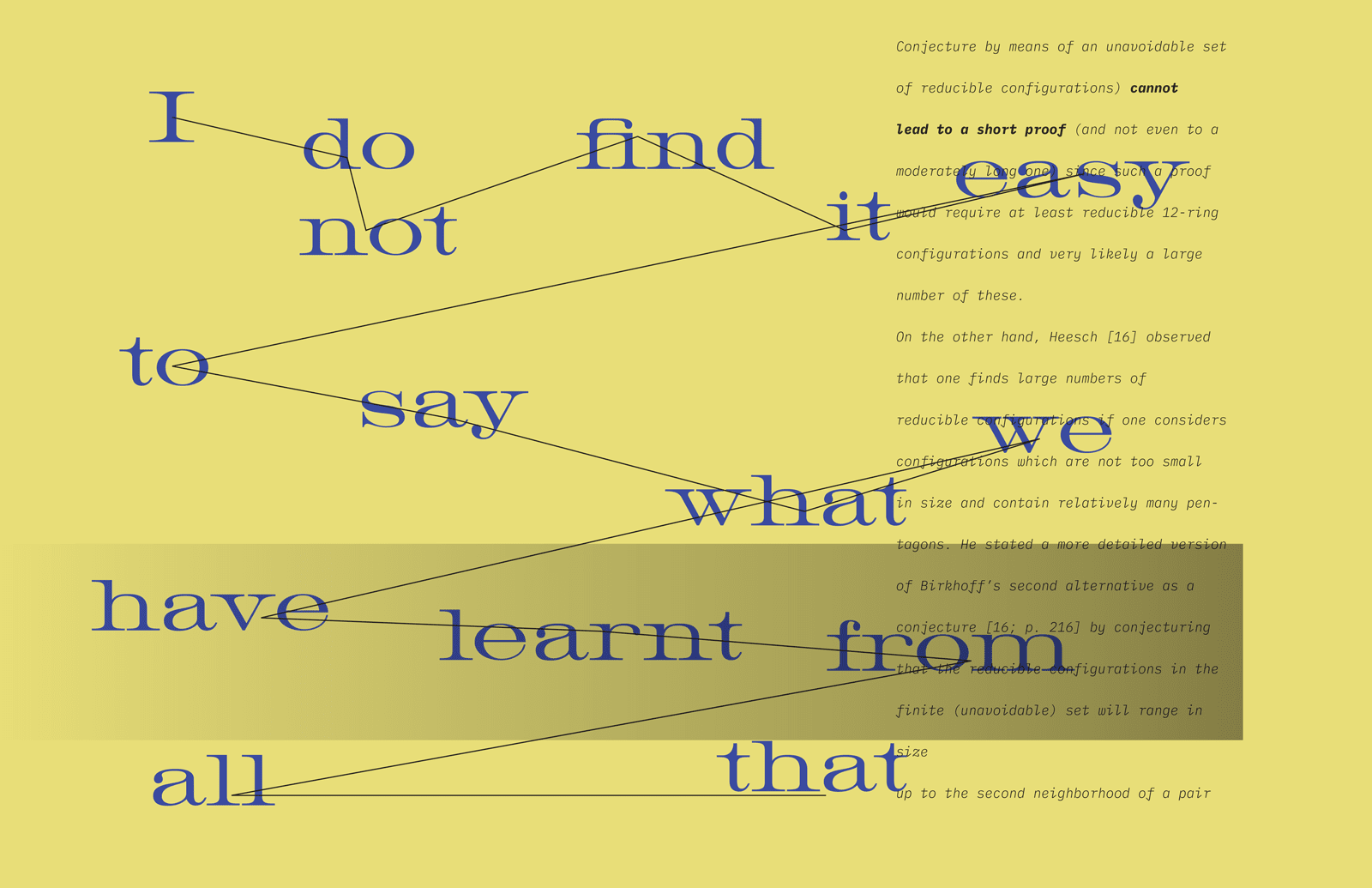
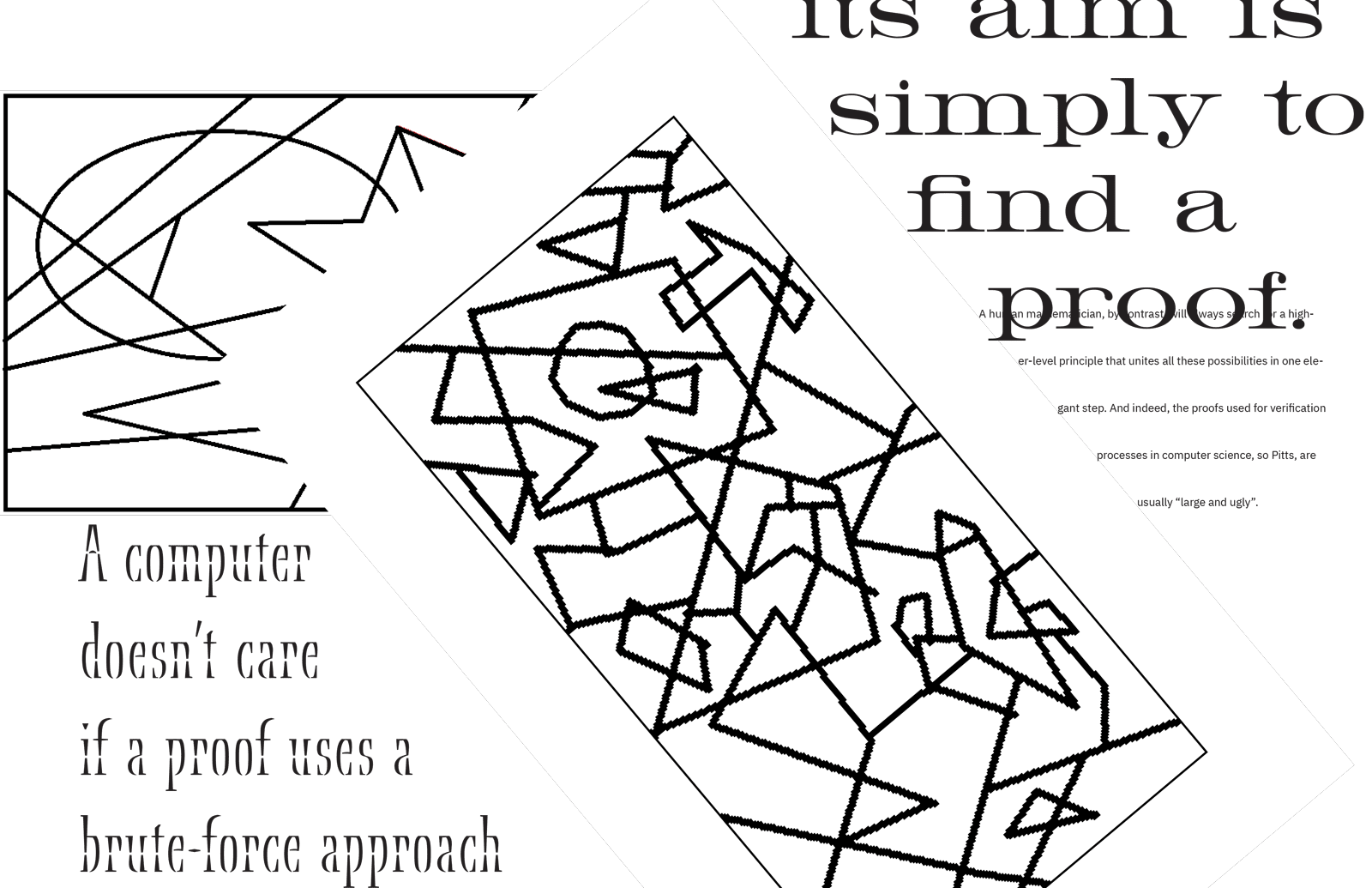
I divided the content into short statements with lines, to keep the process of proving information piece-by-piece as if the reader is following along with an actual proof.

Creative Explorations

Context of Interaction

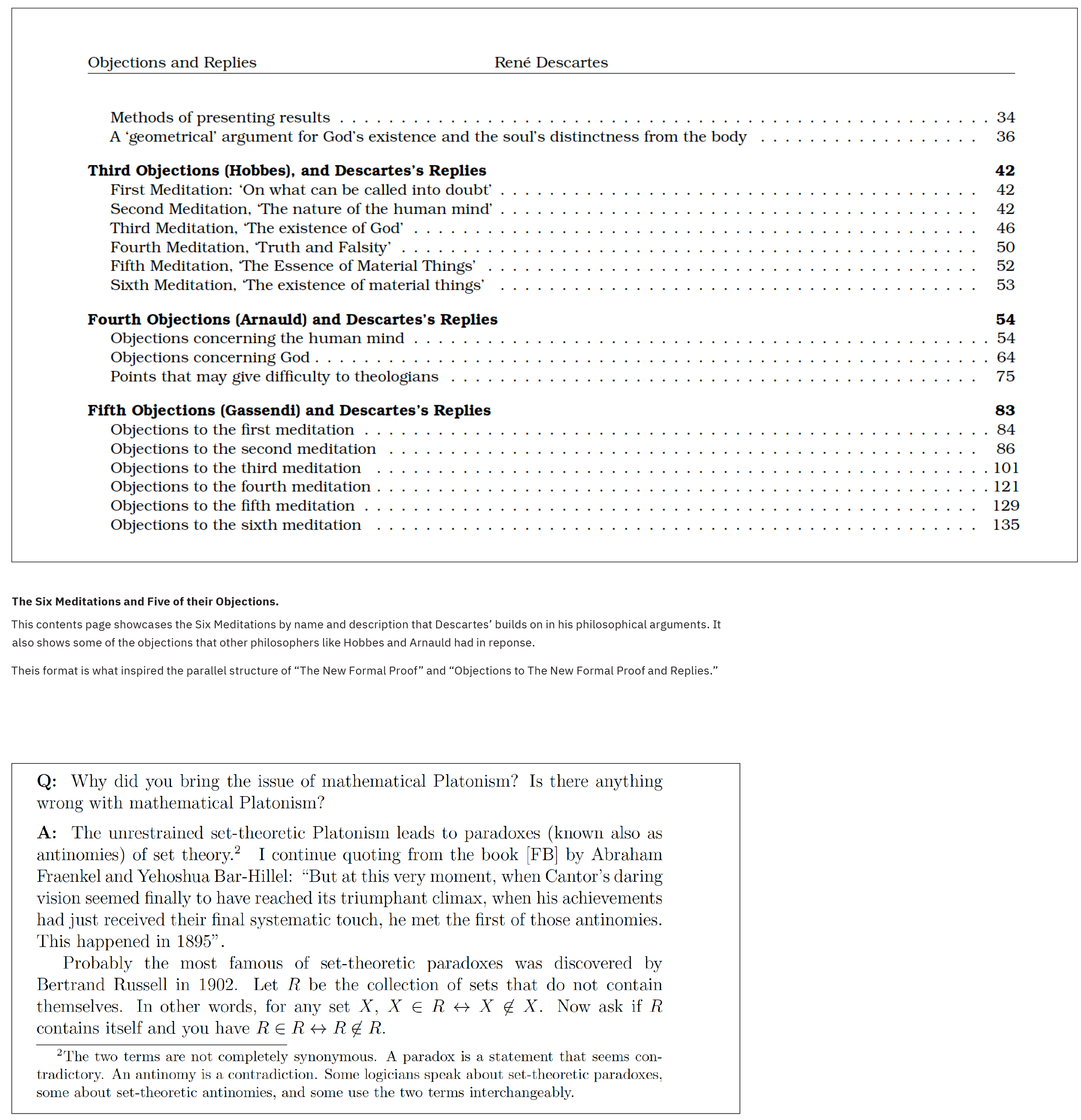
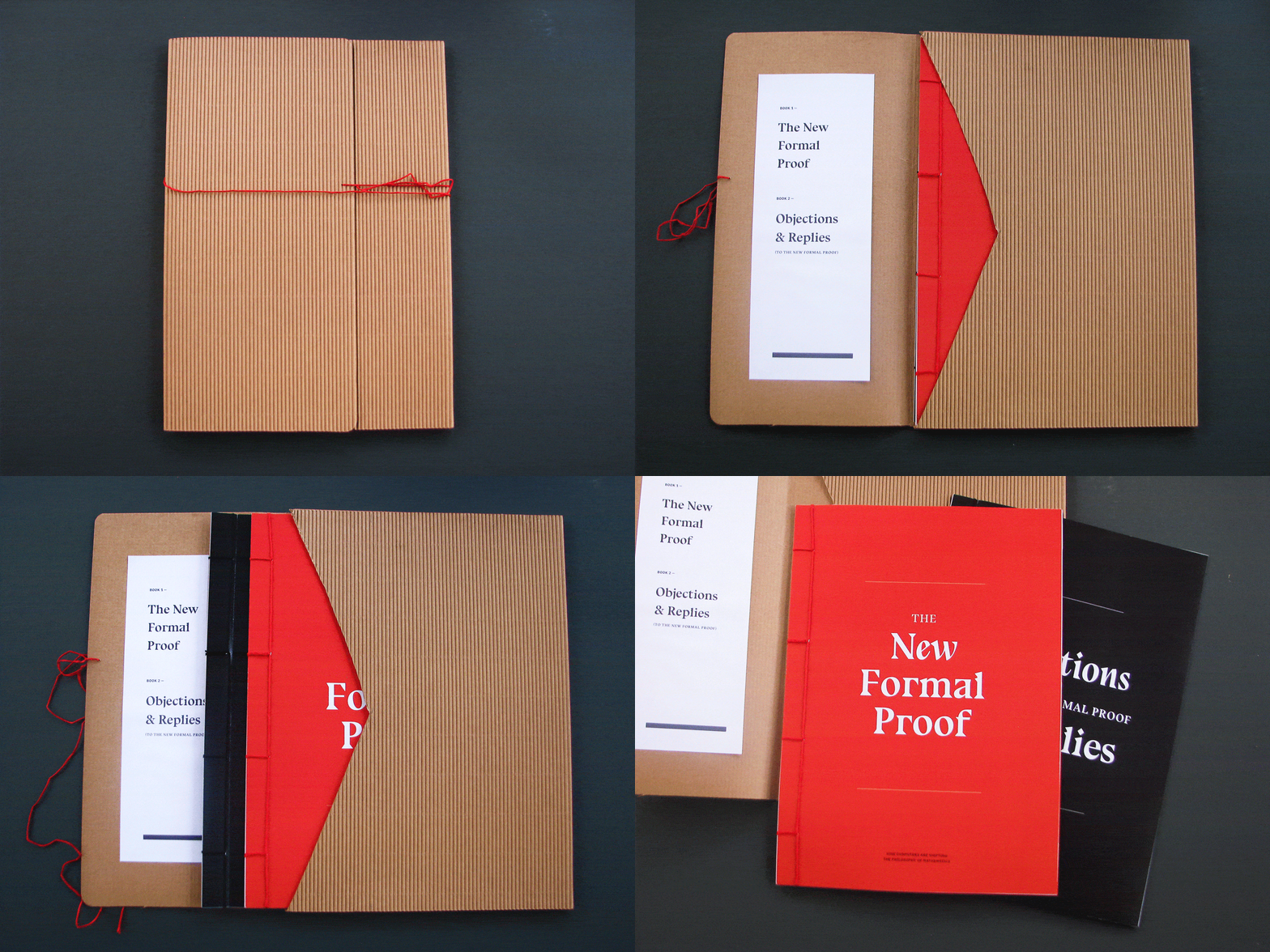
Because of the parallels I was finding between human and computer intelligience, I decided to boil down my content to a philosophical debate rather than a mathematical one. For this reason, I wanted my physical deliverable to parallel the deliverables that a philosopher or anthropologist would produce.

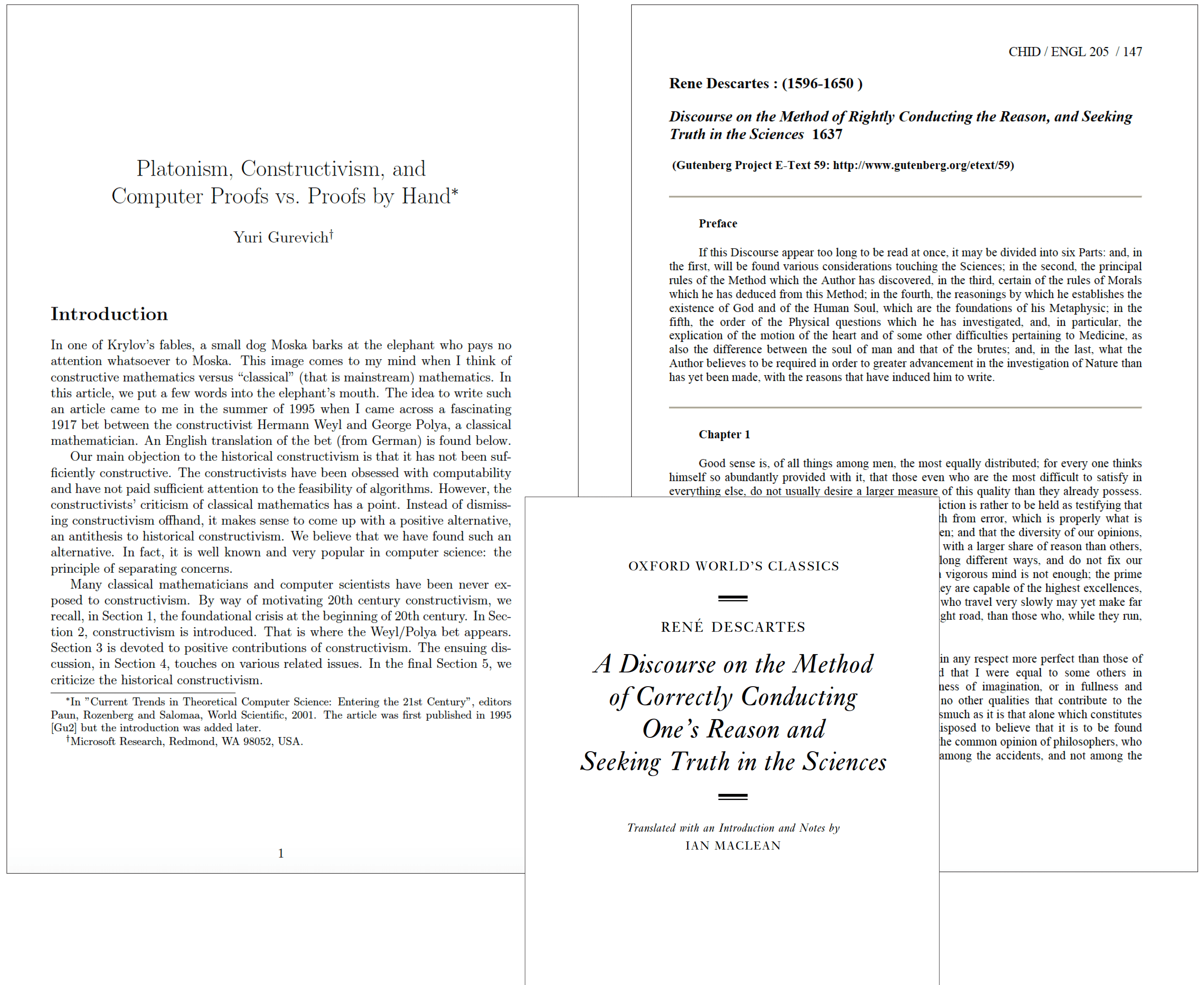
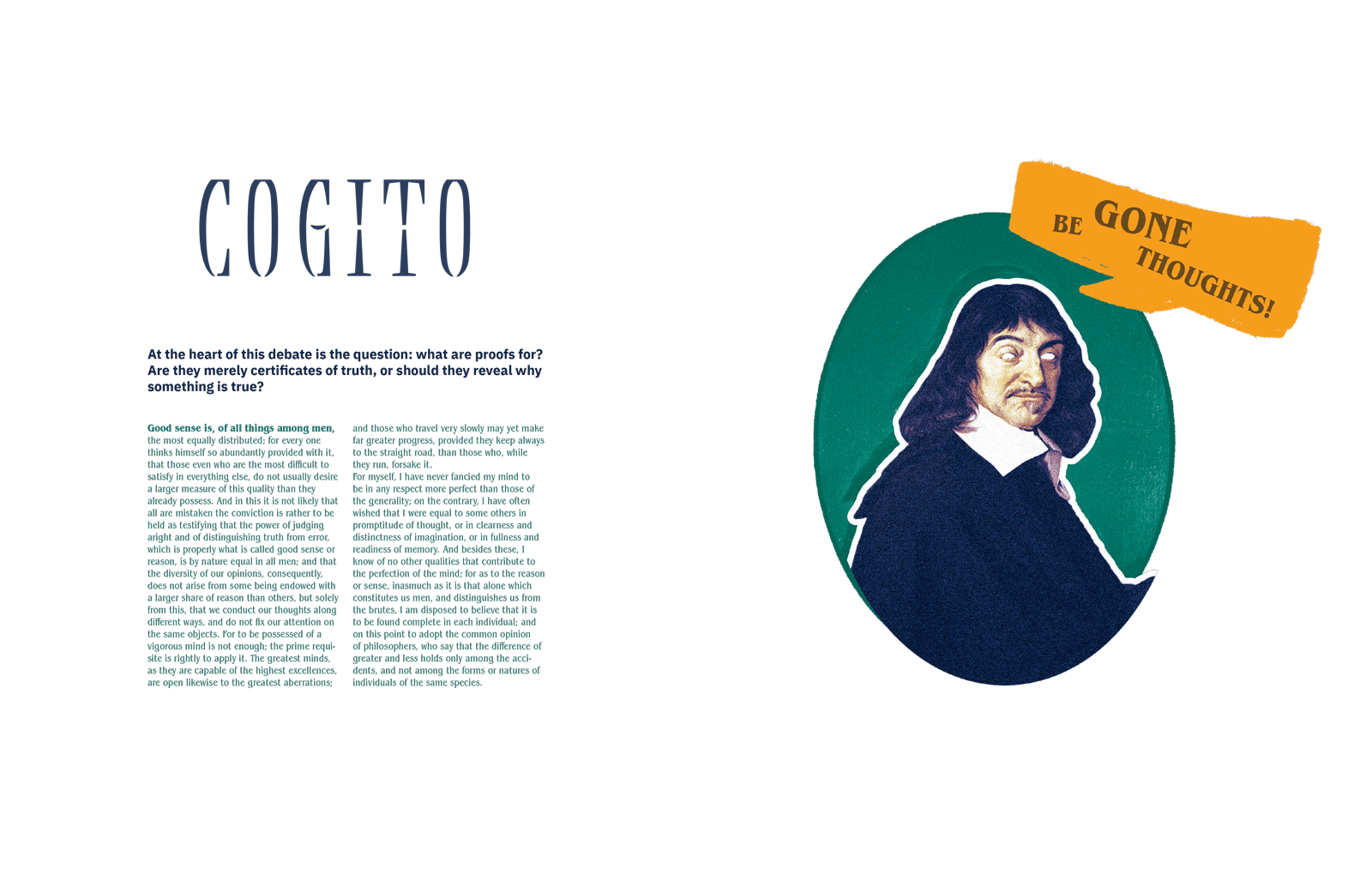
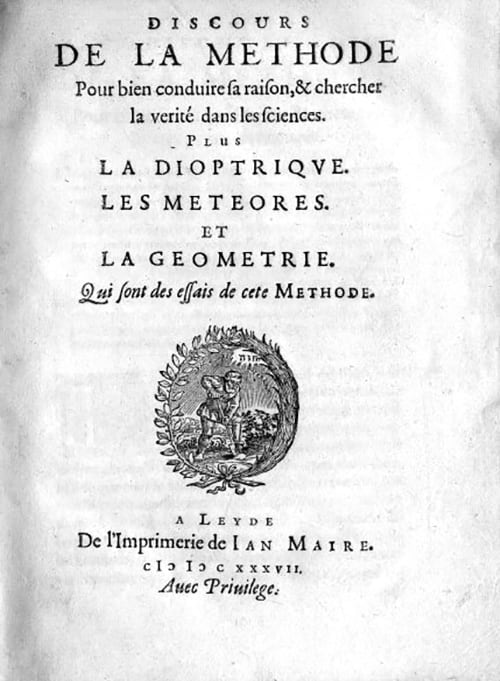
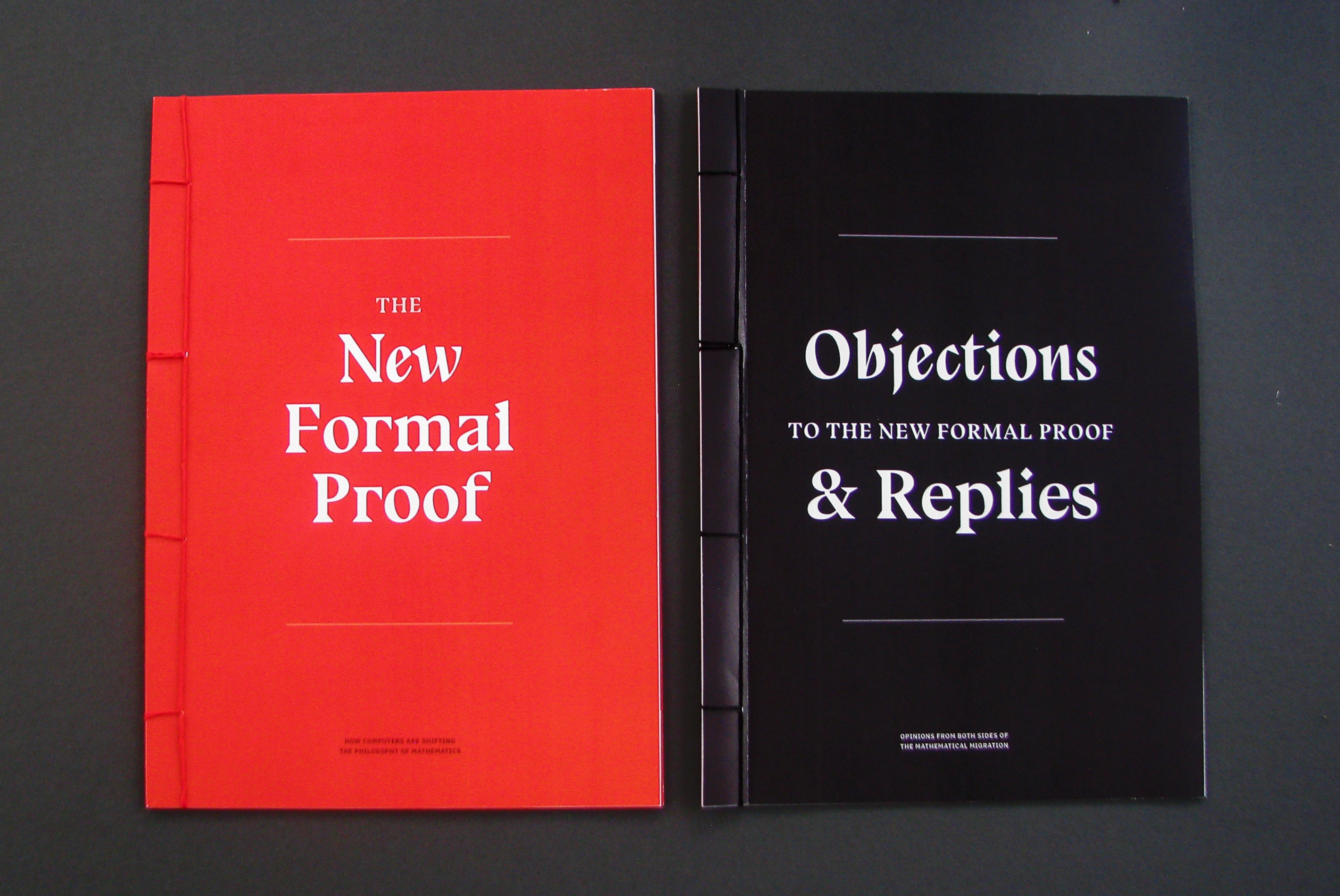
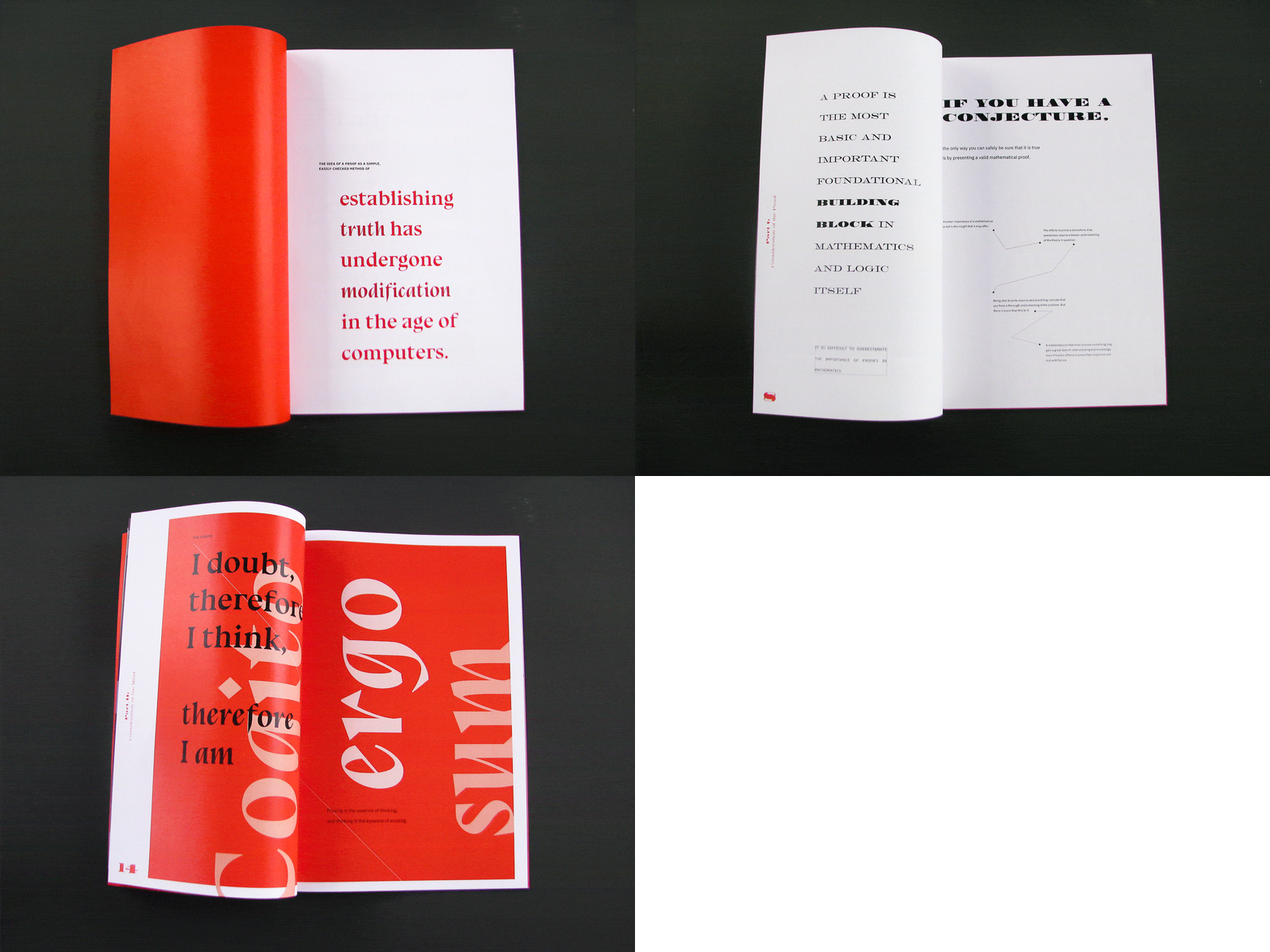
My final outcome is a set of two books: the first book, called “The New Formal Proof,” is modeled off of Rene Descartes’ famous book, “Discourse on the Method” where he proves the Cogito and works through it in a very similar way to how many math proofs are solved. “Discourse on the Method” contains 6 different parts that build up to different discoveries, so I decided to make my book for ISTD divided into 6 parts that would build-up the story of migration in today’s mathematics.

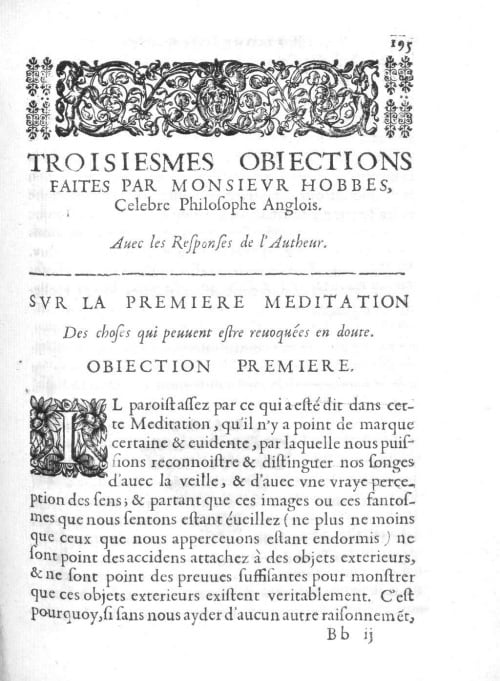
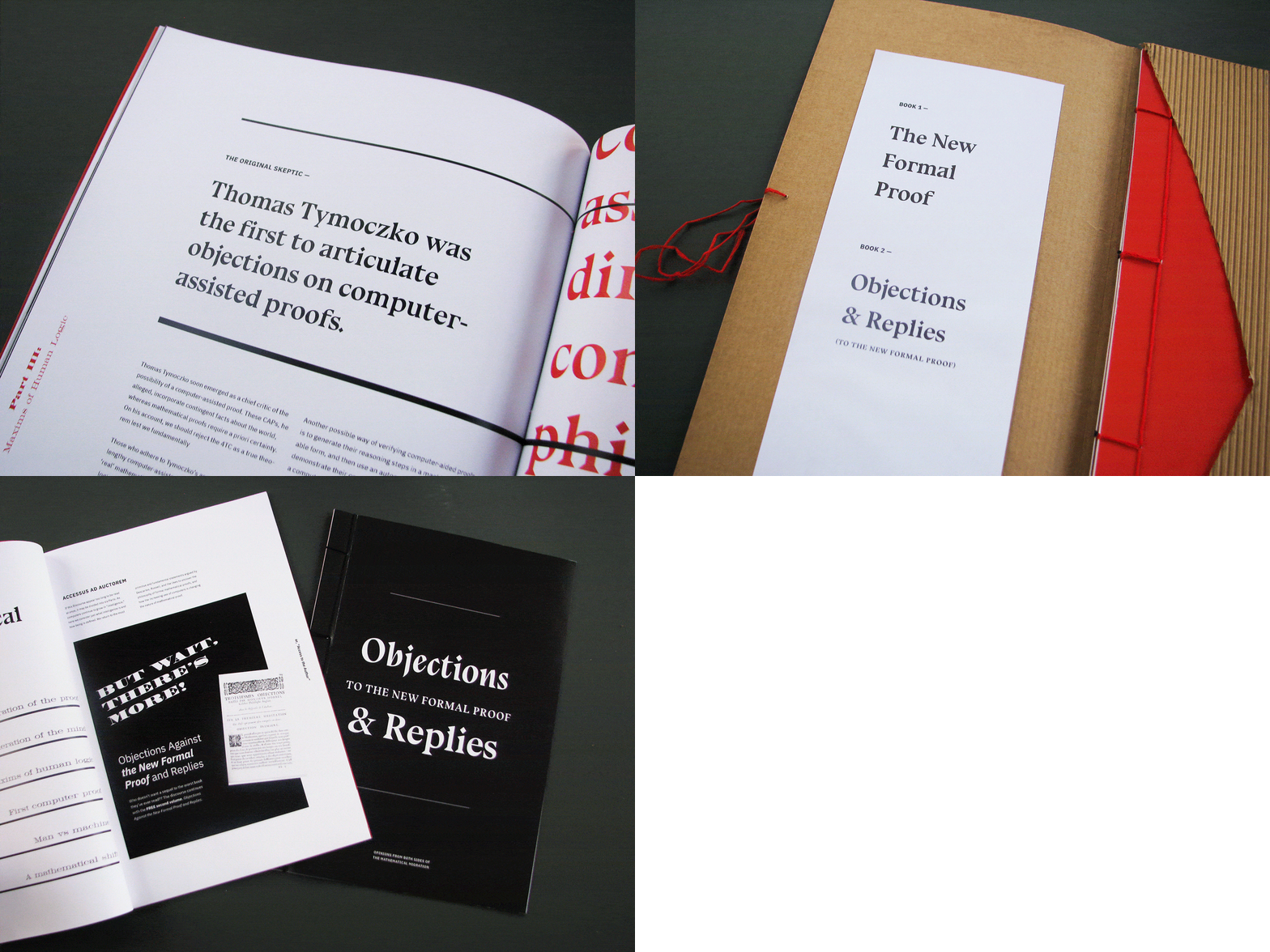
The second book, called “Objections to the New Formal Proof and Replies” would enclose some of the biggest supporters and critics of computer-assisted proofs, and is based on the fact that many philosophers responded to Descartes’ original work by penning letters either in support or protest and Descartes’ would publish these letters and his own response back in a separate volume as well, as pictured on the page.

Descartes' original Discourse on the Method
Published Objections to Discourse on the Method

Visual Style

Type

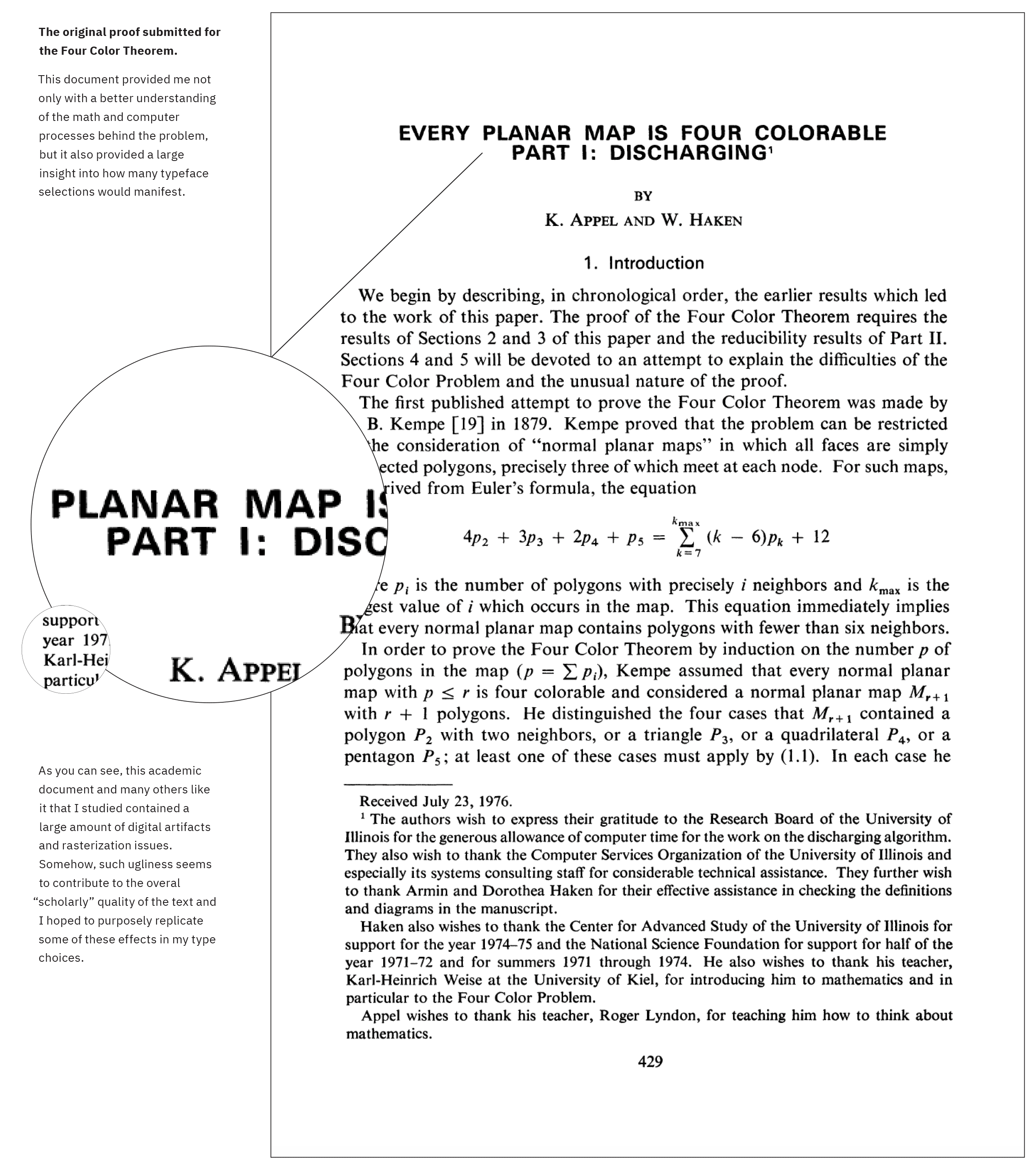
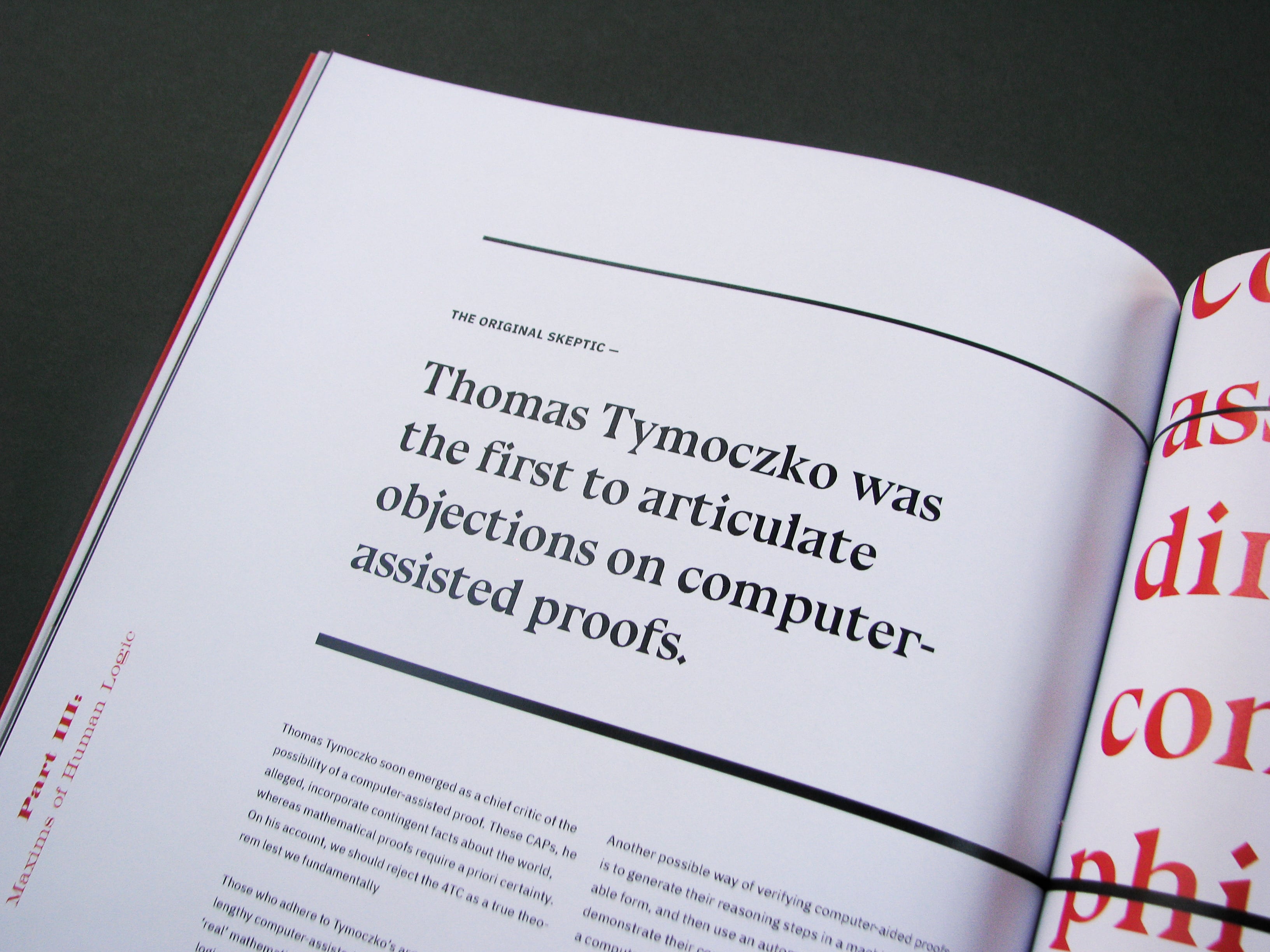
The overall typesetting direction was to make it “look like an old textbook but not quite as stuffy.” I used a lot of white space in my layouts to compensate for some of the typographic irregularities that occured. I also tried dramatically wide leading on a lot of elements, which got pulled back for the final deliverable but was fun to play with and explore.


Imagery

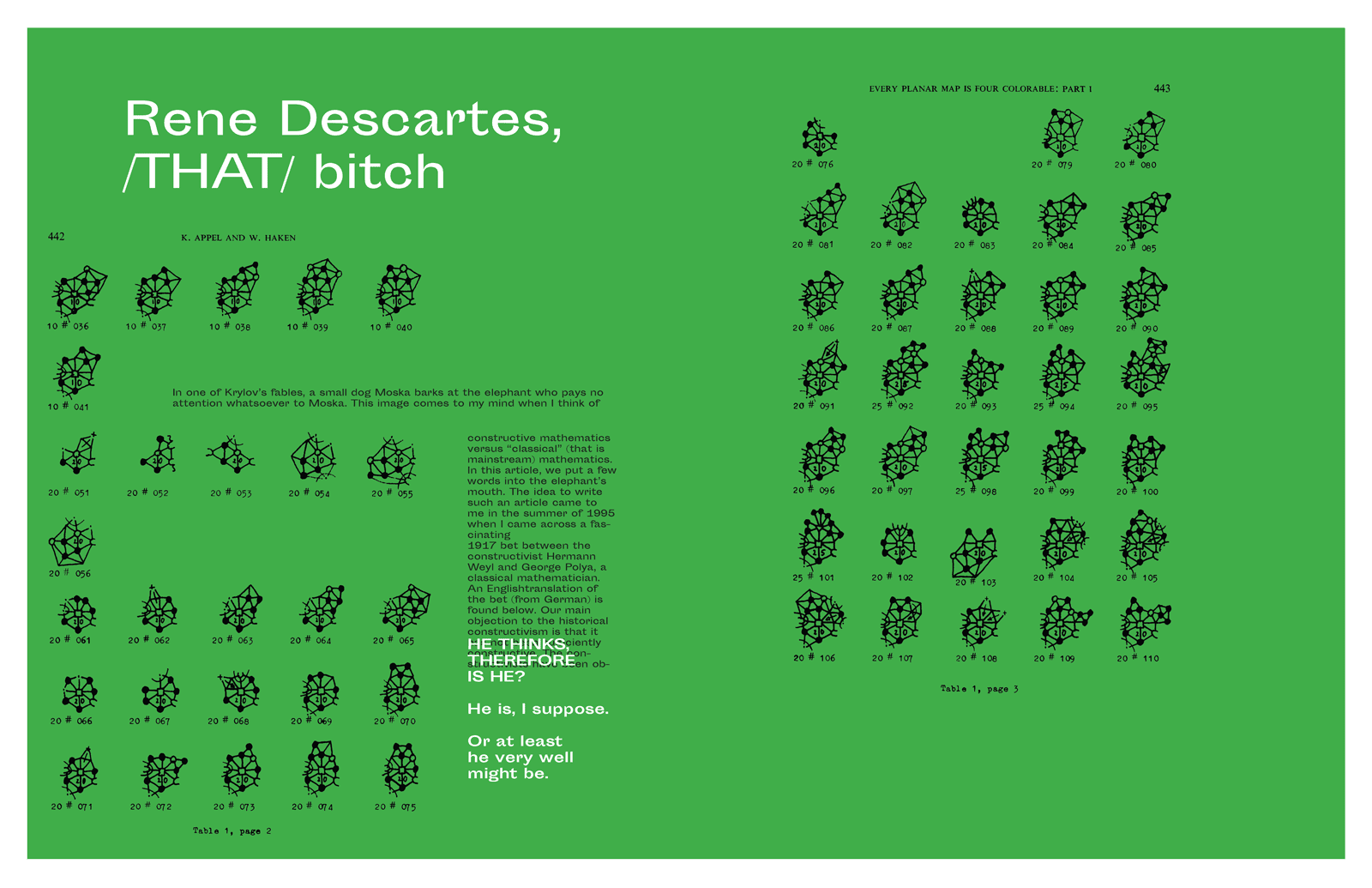
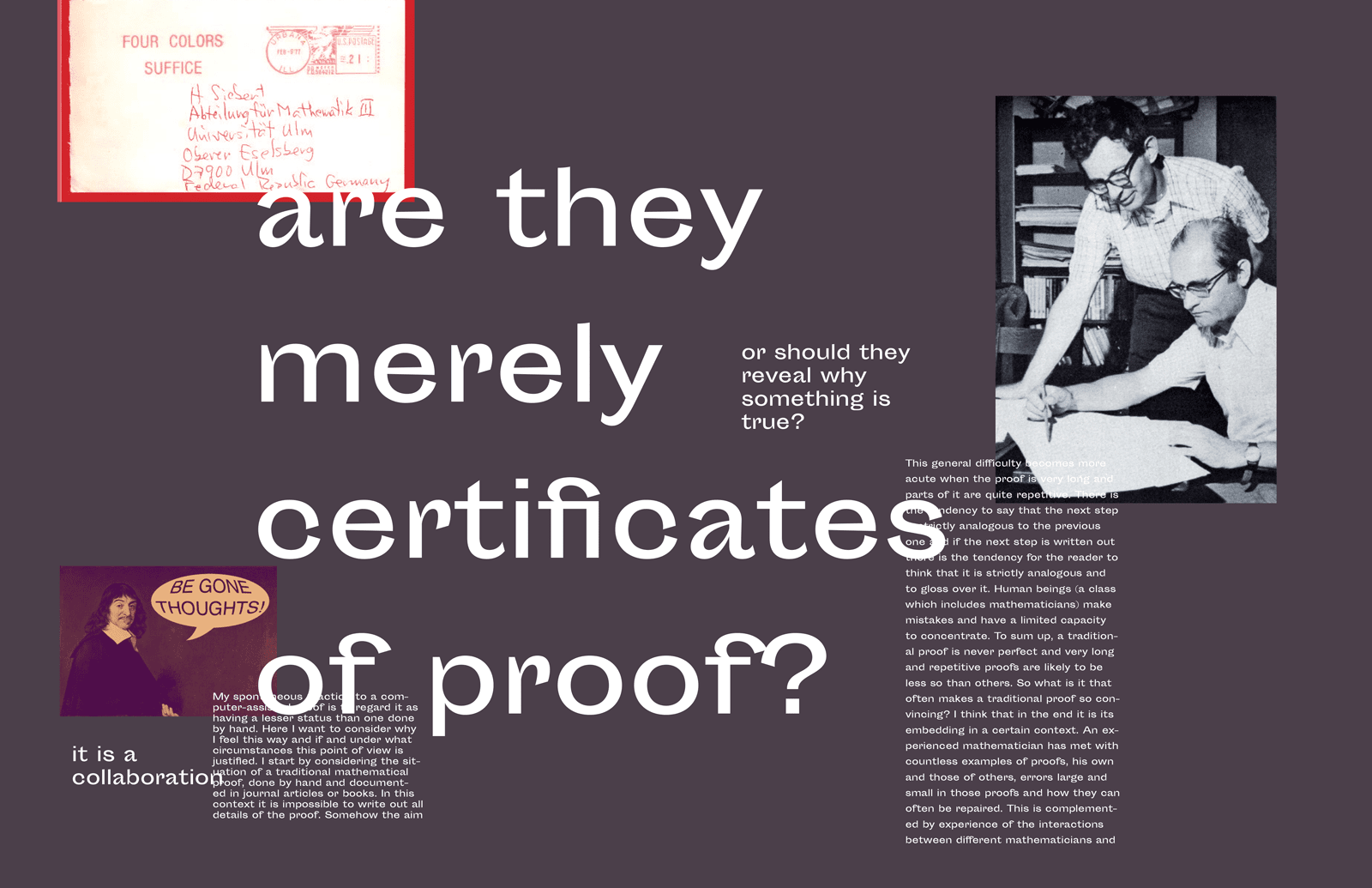
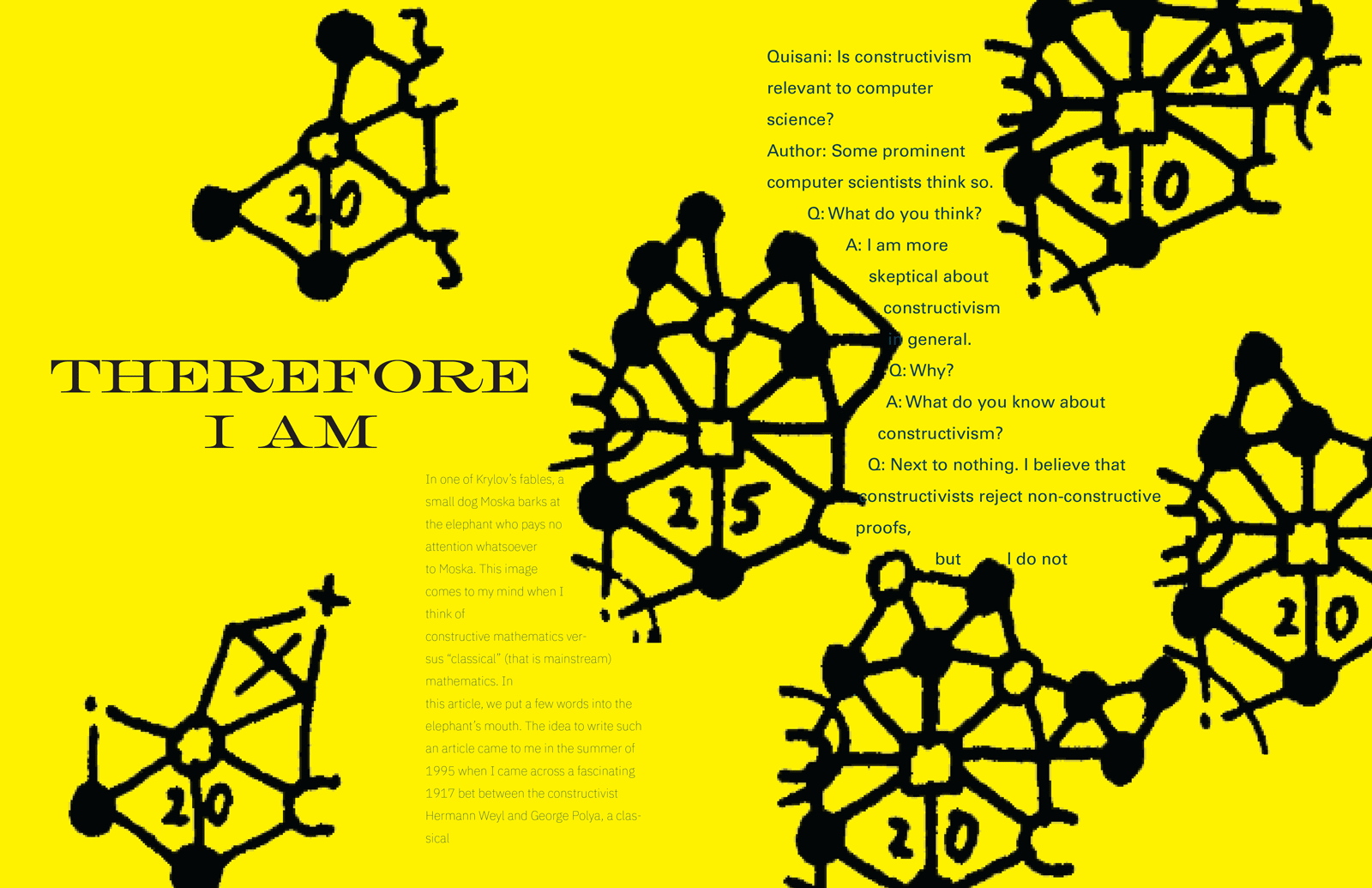
For imagery, I relied on a combination of photographs and data charts. Most of the photographic elements show people in them—the famous mathematicians and philosophers themselves. It was hard to find high resolution images, so to accomodate for that I often applied grain textures or halftones textures over them to lean into the “old school” look. I was also able to pull some pictorial charts from some of my reference documents, which I integrated directly with type.


Color

Black and white was used to represente the two-sided dichotomy between the philosophical argument of computer vs human intelligience. I also used a strong, vibrant accent color to help add more value and hierarchy in the black and white layouts. I ended up using a red-orange, which I saw frequently in my research while I was looking up boxing posters (to poke fun at the fact that mathematicians were in such violent opposition over this philosophical debate).

Design System

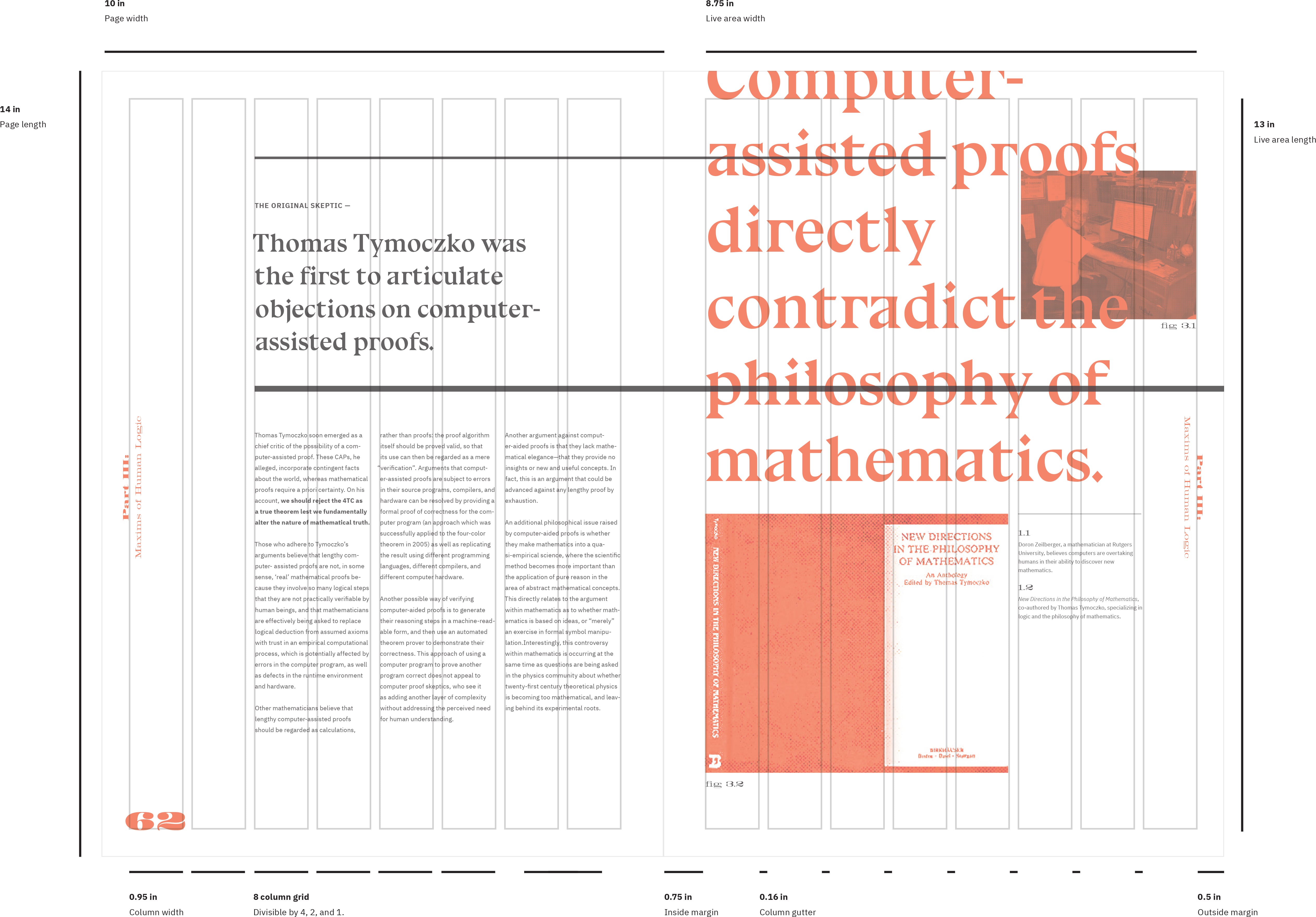
Grid Specs

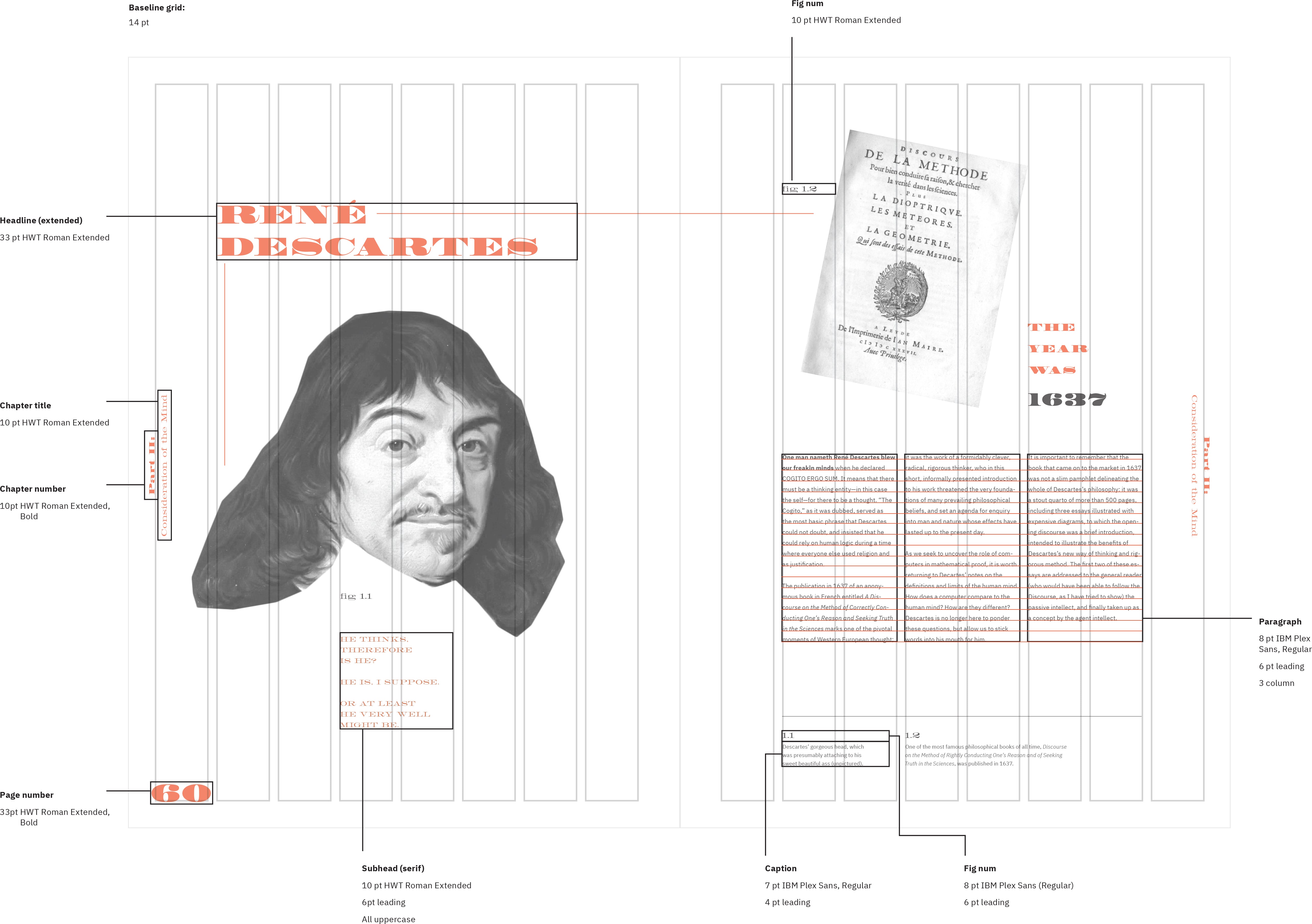
Type Specs

Read the full books

Book #1

Book #2